


Hey there! As a supplier of the 90R Pump, I often get asked whether this pump is suitable for high - viscosity fluids. Well, let's dig into this topic and find out.
First off, let's understand what high - viscosity fluids are. Viscosity is basically a measure of a fluid's resistance to flow. High - viscosity fluids, like thick oils, syrups, or some types of polymers, flow very slowly compared to low - viscosity fluids such as water. When dealing with these thick substances, pumps need to be able to handle the extra resistance without losing efficiency or getting damaged.
So, what about the 90R Pump? This pump is known for its robust design and high - performance capabilities. It's a piston pump, which means it uses pistons to create pressure and move the fluid. Piston pumps are generally pretty good at handling different types of fluids, but high - viscosity ones can still pose some challenges.
One of the key factors to consider is the pump's power. The 90R Pump is designed with a powerful motor that can generate enough force to push high - viscosity fluids through the system. The pistons in the pump work in a coordinated way to create a strong pressure gradient, which helps move the thick fluid along. However, the power consumption might increase when dealing with high - viscosity fluids. You see, the pump has to work harder to overcome the fluid's resistance, so it'll use more energy. But don't worry too much about that. The 90R Pump is engineered to be energy - efficient, even under heavy loads.
Another important aspect is the internal components of the pump. The 90R Pump has well - crafted valves and seals. These components are made from high - quality materials that can withstand the abrasion and wear that come with pumping high - viscosity fluids. The valves are designed to open and close precisely, ensuring a smooth flow of the thick fluid. And the seals prevent any leakage, which is crucial when dealing with expensive or hazardous high - viscosity substances.
But it's not all smooth sailing. High - viscosity fluids can sometimes cause issues with the pump's flow rate. Since these fluids are so thick, they might not flow as quickly as the pump is designed to handle. This can lead to a decrease in the overall flow rate. However, the 90R Pump has adjustable settings that allow you to control the flow rate according to the viscosity of the fluid. You can tweak the pump's speed and pressure to ensure that the fluid moves at an appropriate rate.
Now, let's compare the 90R Pump with some other pumps in the market. There are pumps like the Hydraulic Pump For Danfoss H1T 045/053, PVH Pump, and H1P Pump. Each of these pumps has its own strengths and weaknesses when it comes to handling high - viscosity fluids.
The Hydraulic Pump For Danfoss H1T 045/053 is a reliable pump, but it might struggle a bit more with extremely high - viscosity fluids compared to the 90R Pump. The 90R Pump's more powerful motor gives it an edge in pushing thick fluids. The PVH Pump is known for its precision, but it might be more expensive to operate when dealing with high - viscosity substances due to its complex design. On the other hand, the H1P Pump is a good option for medium - viscosity fluids, but the 90R Pump offers better performance for very thick fluids.
In terms of maintenance, the 90R Pump is relatively easy to take care of. High - viscosity fluids can leave residues in the pump over time, which can affect its performance. But the 90R Pump has a simple design that makes it easy to disassemble and clean. You can regularly check the valves and seals for any signs of wear and replace them if necessary. This helps keep the pump in top condition and ensures its long - term performance when pumping high - viscosity fluids.

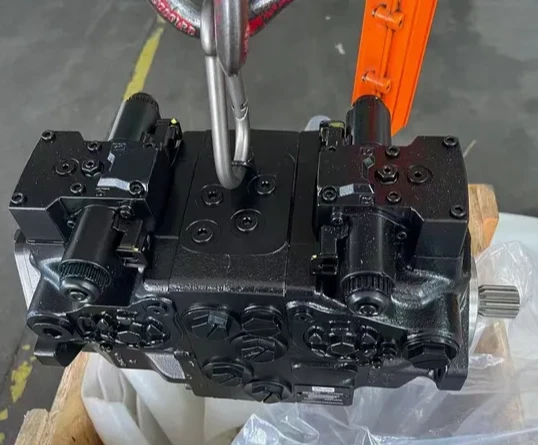
So, to sum it up, the 90R Pump is definitely suitable for high - viscosity fluids. It has the power, the right internal components, and adjustable settings to handle the challenges that come with thick fluids. While there might be some minor issues like increased power consumption or a slightly lower flow rate, these can be managed with proper operation and maintenance.
If you're in the market for a pump to handle high - viscosity fluids, I highly recommend considering the 90R Pump. It's a reliable and efficient choice that can meet your needs. Whether you're in the food industry dealing with syrups, the chemical industry working with polymers, or any other field that requires pumping thick fluids, the 90R Pump can be a great addition to your system.
If you're interested in learning more about the 90R Pump or want to discuss your specific requirements, feel free to reach out. We're here to help you make the right choice for your pumping needs.
References
- Fluid Mechanics textbooks for understanding viscosity and pump performance
- Manufacturer's specifications for the 90R Pump, Hydraulic Pump For Danfoss H1T 045/053, PVH Pump, and H1P Pump


