


Hey there! As a supplier of FRR Pumps, I've had my fair share of experiences and insights into how different factors can affect the performance of these pumps. One factor that often doesn't get as much attention as it should is altitude. In this blog, I'm gonna break down what impact altitude can have on the performance of FRR Pumps.
First off, let's understand a bit about FRR Pumps. These pumps are pretty awesome. They're used in a wide range of applications, from industrial machinery to mobile equipment. The FRR Pump is known for its reliability and efficiency, but like any piece of equipment, it's not immune to the effects of its environment.
Altitude plays a crucial role because it directly affects the air pressure and temperature. As you go higher in altitude, the air pressure drops. This drop in air pressure can have a few different impacts on the FRR Pump.
One of the main things is the pump's ability to intake fluid. The pump relies on a certain level of pressure to draw in the fluid it's supposed to pump. At lower air pressures (higher altitudes), the pump might have a harder time creating the necessary suction. This can lead to reduced flow rates. You see, the fluid might not be getting into the pump as easily as it does at lower altitudes. So, instead of pumping at its normal rate, the flow might slow down. This can be a real problem in applications where a consistent flow rate is crucial, like in some manufacturing processes or in hydraulic systems that need to operate at a specific pressure.
Another aspect is the cavitation risk. Cavitation is when bubbles form in the fluid inside the pump due to a drop in pressure. At higher altitudes, with the lower air pressure, the risk of cavitation increases. These bubbles can cause a lot of damage to the pump over time. They can erode the pump's internal components, like the impellers and the housing. This erosion can lead to decreased efficiency and eventually, pump failure. So, it's super important to keep an eye on the cavitation risk when using an FRR Pump at high altitudes.
Temperature is also affected by altitude. Generally, as you go higher, the temperature drops. This change in temperature can impact the viscosity of the fluid being pumped. Most fluids become more viscous (thicker) at lower temperatures. A more viscous fluid can be harder for the pump to move. The pump has to work harder to push the thicker fluid through its system. This increased workload can put more stress on the pump's motor and other components. It can lead to higher energy consumption and a shorter lifespan for the pump.
Now, let's talk about some possible solutions to these altitude-related issues. One option is to adjust the pump's settings. Some FRR Pumps have adjustable parameters that can be tweaked to compensate for the changes in altitude. For example, you might be able to increase the pump's speed to maintain the desired flow rate. However, this has to be done carefully because increasing the speed too much can also cause other problems, like overheating the pump.
Another solution is to use a different type of fluid. There are fluids available that are designed to have a more stable viscosity over a wider range of temperatures. Using one of these fluids can help reduce the impact of the temperature changes at high altitudes.
It's also a good idea to do regular maintenance on the pump, especially when it's operating at high altitudes. This includes checking for signs of cavitation, inspecting the internal components for wear and tear, and ensuring that the pump is properly lubricated.
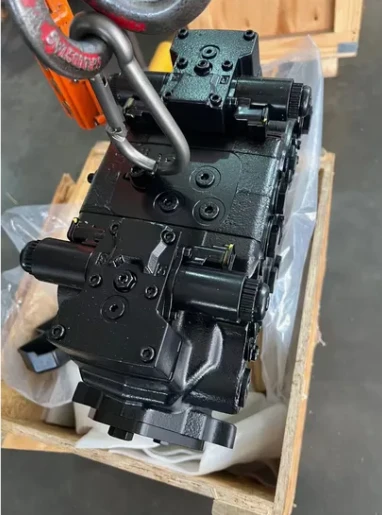
I've also worked with other types of pumps, like the Hydraulic Pump For Danfoss H1T 045/053 and the H1P Pump. These pumps also face similar altitude-related challenges. The principles are pretty much the same, but each pump might have its own unique characteristics and sensitivities.

In conclusion, altitude can have a significant impact on the performance of FRR Pumps. The drop in air pressure and the change in temperature can lead to reduced flow rates, increased cavitation risk, and higher energy consumption. But with the right adjustments, the use of appropriate fluids, and regular maintenance, these issues can be managed.
If you're in the market for an FRR Pump or any of the other pumps I mentioned, and you're dealing with high altitude applications, I'd love to have a chat with you. I can help you figure out the best way to ensure your pump performs at its best in your specific environment. Whether you need advice on pump selection, setting adjustments, or fluid choices, I'm here to assist. Don't hesitate to reach out and start a conversation about your pump needs.
References
- Fluid Mechanics textbooks on pump operation and the effects of environmental factors
- Manufacturer's manuals for FRR Pumps, Hydraulic Pump For Danfoss H1T 045/053, and H1P Pump


